
 English

Views: 0 Author: Site Editor Publish Time: 2025-06-09 Origin: Site


Diamond core bits are essential tools in the construction and engineering industries, renowned for their ability to drill precise holes in hard materials. A common question that arises is whether a diamond core bit can effectively cut through rebar embedded within concrete structures. This inquiry is pivotal for professionals dealing with structural modifications, installations, and renovations where encountering rebar is inevitable. Understanding the capabilities and limitations of diamond core bits in this context is crucial for ensuring efficiency, safety, and the integrity of the structures involved.
Diamond core bits are cylindrical drilling tools encrusted with diamond particles on their cutting edge. They are designed to grind away material to create precise holes without causing significant damage to the surrounding area. The diamonds used are industrial-grade, which makes them incredibly hard and effective for cutting through tough materials like concrete, granite, and marble. The efficiency of these bits stems from the hardness of diamonds, allowing them to cut by abrasion rather than sheer force.
Several types of diamond core bits are available, each tailored for specific materials and applications:
Concrete Core Bits: Specifically designed for drilling into concrete structures, these bits are often used in construction and utility installations.
Granite Core Bits: Ideal for cutting through granite, commonly used in countertop installations and stone fabrication.
Marble Core Bits: Used for drilling into marble surfaces, ensuring smooth and chip-free holes.
Porcelain Core Bits: Designed for hard, brittle materials like porcelain tiles, minimizing the risk of cracks.
Dekton Core Bits: Specialized for cutting through Dekton surfaces, a relatively new and ultra-compact material.
Each type utilizes the inherent properties of diamonds to deliver precise and clean cuts, adapting to the hardness and brittleness of the material in question.
Reinforcing bar, commonly known as rebar, is integral to concrete construction. It provides the necessary tensile strength that concrete lacks, making structures more robust and capable of withstanding various stresses. Rebar is typically made of steel and is embedded within concrete slabs, beams, and columns. Its presence is crucial for structural integrity, especially in buildings, bridges, and other infrastructural projects.
Cutting through rebar presents several challenges due to its toughness and the potential risks involved. The steel composition of rebar makes it resistant to abrasion, which can quickly wear down standard cutting tools. Additionally, improper cutting techniques can generate excessive heat, leading to tool damage or failure. Safety concerns also arise from the possibility of sparks, tool kickback, and structural weakening if not performed correctly.
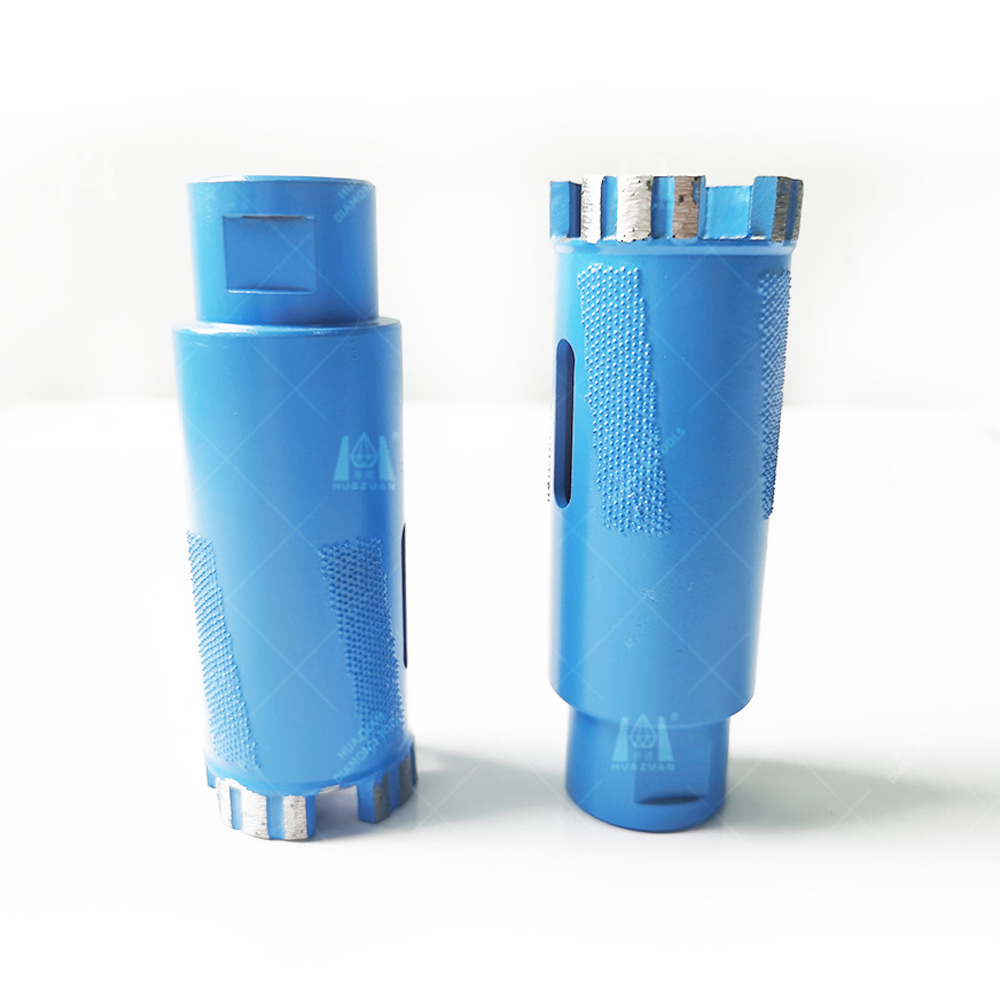
Diamond core bits are capable of cutting through rebar, but this process is more complex than drilling through concrete alone. The interaction between the diamond-impregnated segments of the bit and the steel rebar is significant because steel is ductile and can cause the bit to glaze over if not managed properly. The diamonds cut by grinding away material; however, steel can be more challenging due to its ability to deform rather than fracture under pressure.
Several factors influence the effectiveness of a diamond core bit when cutting through rebar:
Quality of the Diamond Core Bit: Higher-quality bits, like those from reputable manufacturers such as Huazuan Diamond Tools, are designed to handle tougher materials.
Speed and Pressure: Correct drilling speed and applied pressure are essential to prevent overheating and to maintain cutting efficiency.
Cooling Mechanism: Adequate cooling, typically with water, helps dissipate heat and remove debris from the cutting area.
Bit Design: Bits with specialized segments are better suited for cutting through both concrete and rebar.
Understanding these factors helps operators adjust their techniques to improve performance when encountering rebar.
Using the right equipment is paramount when cutting rebar with a diamond core bit. A drill rig with sufficient power and stability ensures steady drilling. The bit chosen should be rated for cutting metal as well as concrete. For instance, a specialized concrete core bit with enhanced diamond segments can improve performance. Proper anchoring of the drill rig prevents movement and enhances safety.
To optimize the cutting process, consider the following tips:
Adjust Drilling Speed: Use a lower RPM when the bit contacts rebar to reduce heat and prevent glazing.
Maintain Steady Pressure: Apply consistent pressure without forcing the bit, allowing it to grind through the material.
Use Adequate Cooling: Continuous water flow cools the bit and flushes out debris, improving cutting efficiency.
Monitor Bit Condition: Regularly check the bit for signs of wear or damage and replace it if necessary.
Employ Pilot Holes: For larger diameters, drilling a pilot hole can guide the bit and reduce stress.
Implementing these practices can significantly enhance the effectiveness of cutting rebar with diamond core bits.
One of the primary advantages is the precision offered by diamond core bits. They produce clean, accurate holes with minimal impact on the surrounding material. This precision is crucial in structural applications where maintaining the integrity of the concrete is essential. Additionally, the efficiency of diamond core bits reduces the time required for drilling, which can lead to cost savings and increased productivity on the job site.
Using diamond core bits can enhance safety due to their ability to cut without generating excessive vibrations or dust. This reduces the risk of micro-cracking in the concrete and minimizes airborne particles that can be harmful if inhaled. Moreover, the reduced noise levels contribute to a safer and more comfortable working environment.
Cutting through rebar accelerates the wear of diamond core bits. The hardness of steel can deteriorate the diamond segments more rapidly than when cutting concrete alone. This increased wear necessitates more frequent replacement of bits, which can impact project costs and timelines. Selecting high-quality bits can mitigate some of these effects by offering greater durability.
While diamond core bits are effective, they are also more expensive than standard drilling bits. The initial investment and the potential for increased wear when cutting rebar must be considered in project budgeting. Balancing the cost against the benefits of precision and efficiency is essential for decision-makers in construction and engineering projects.
Diamond core bits can indeed cut through rebar, provided that proper techniques and high-quality equipment are used. Understanding the interaction between the bit and the rebar, and adjusting operation methods accordingly, is key to successful drilling. While there are challenges, such as increased tool wear and cost considerations, the advantages in precision, efficiency, and safety often outweigh these drawbacks. Professionals must evaluate the specific requirements of their projects to determine the most effective approach, ensuring that the structural integrity and project objectives are maintained.
1. Can all diamond core bits cut through rebar?
Not all diamond core bits are designed to cut through rebar. Bits specifically engineered for reinforced concrete, such as certain concrete core bits, are better suited for this purpose. It's essential to choose a bit rated for metal cutting to ensure effectiveness and safety.
2. Does cutting rebar with a diamond core bit damage the bit?
Cutting rebar accelerates the wear on a diamond core bit due to the hardness of steel. While it doesn't necessarily damage the bit immediately, it does reduce its lifespan compared to cutting concrete alone. Using high-quality bits can help mitigate excessive wear.
3. What precautions should I take when cutting rebar with a diamond core bit?
Ensure proper equipment setup, use adequate cooling methods like water to reduce heat, and adjust drilling speed and pressure appropriately. Regularly inspect the bit for wear, and always follow safety guidelines to prevent accidents.
4. Is it cost-effective to use diamond core bits for cutting rebar?
While diamond core bits are more expensive, their precision and efficiency can lead to time savings and reduced labor costs. The decision should factor in the project's specific needs and budget considerations, weighing the initial cost against long-term benefits.
5. Can I use water to cool the bit when cutting indoors?
Yes, water can and should be used to cool the bit even when drilling indoors. However, appropriate measures must be taken to manage water flow and prevent damage to the surrounding area, such as using containment systems or wet vacuums.
6. Are there alternatives to diamond core bits for cutting rebar?
Alternatives include using carbide-tipped core bits or percussion drilling methods. However, these alternatives may not offer the same level of precision and can cause more vibration and potential damage to the concrete structure.
7. Where can I find high-quality diamond core bits?
High-quality diamond core bits can be sourced from reputable manufacturers like Huazuan Diamond Tools, which offers a range of products tailored for various drilling needs, ensuring durability and performance.


 No.351, Dingshi Jing, Shijing, Dongling Town, Huian, Quanzhou, Fujian, China
+86-595-86780371
+86-15905012435


