
 English

Views: 0 Author: Site Editor Publish Time: 2026-08-23 Origin: Site


Off-the-shelf tooling often forces an uncomfortable compromise. You usually must choose between optimal cutting speed and extended blade longevity. This dilemma becomes a major issue in high-volume applications. It also creates problems when processing highly specialized materials. Moving from standard consumables to a custom diamond saw blade completely changes the operational dynamic. You shift away from simply buying generic products. Instead, you begin engineering a precise mechanical solution. Standard products force you to guess your exact needs. Custom options solve your specific job site challenges.
To secure an accurate quote, buyers must provide exact operational variables. Manufacturers need highly detailed data to build the right profile. They need to understand your bond matrices thoroughly. They also must know your specific equipment constraints. Providing this information guarantees you receive a product built exactly for your workflow. By understanding these technical parameters, you eliminate costly guesswork entirely. You maximize efficiency and operator safety on the job site. You will learn exactly how to define these critical variables for your next custom order.
Custom formulations rely on the "inverse rule": hard materials require soft bonds, and abrasive materials require hard bonds.
Equipment horsepower and optimal RPM dictate the necessary diamond concentration and core steel tension.
Diamond blade diameter and segment geometry must be specified based on the required depth of cut and finish quality.
Balancing cutting speed against total blade life is a mandatory trade-off that should align with project economics and labor costs.
To build the right tool, manufacturers look closely at metallurgy. The fundamental engineering principle involves the inverse bonding rule. Hard and dense materials demand a remarkably softer metal bond. Examples of these materials include engineered quartz or heavily reinforced concrete. A soft bond wears away at a predictable, controlled rate. This erosion exposes fresh, extremely sharp diamonds quickly. It keeps the cutting edge highly aggressive.
Conversely, soft and highly abrasive materials demand a much harder bond. Green concrete and asphalt fall directly into this abrasive category. A hard bond holds the embedded diamonds securely in place. It successfully prevents premature segment wear caused by abrasive sand.
Relying on broad material categories lacks sufficient technical detail. You must specify exact aggregate compositions. Provide the specific Mohs hardness rating for your target material. List any steel reinforcement ratios if you cut concrete. If you regularly process highly abrasive sand, mention it clearly. Technical detail matters immensely for proper formulation.
Consider a practical real-world example to illustrate this concept. A dedicated granite saw blade requires a highly specific metallurgical makeup. Granite stands as an incredibly dense and hard natural stone. The tool requires a soft metallic bond matrix to cut it effectively. Alternatively, a general-purpose masonry tool uses a medium-hard bond. If you operate the masonry tool on granite, it glazes over quickly. The diamond crystals blunt, and the metal matrix fails to release them. The tool simply stops cutting and generates extreme friction. This common mistake highlights why specific material profiling remains absolutely essential.
Every machine on your job site operates differently. You must carefully match the engineered core tension to your specific machine. Look closely at the actual operating RPM under load. The spindle speed and the peripheral speed must align perfectly. Industry experts often measure this in surface feet per minute. Running your equipment at incorrect speeds causes severe operational problems. You might experience severe segment glazing very rapidly. Dangerous core cracking also occurs frequently under wrong tensions. Always tell your manufacturer your exact operational spindle speeds.
Motor horsepower heavily influences the core design. High-horsepower machines generate massive amounts of torque. A 65-plus horsepower flat saw provides a good example. These robust machines require significantly higher diamond concentrations. They also need harder matrix bonds to handle the extreme mechanical power. Low-horsepower machines require a completely different engineering approach. They need much lower diamond concentrations. This specialized formulation keeps the cutting speed high. It stops the friction from bogging down the smaller motor.
Mounting requirements carry equal importance for safety. You must specify precise arbor hole dimensions. Note the exact locations of any required drive pin holes. Flush-cut mounting patterns require extremely exact measurements. This detail becomes critical when ordering a custom bridge saw blade. Automated fabrication shops rely heavily on these tight mechanical tolerances. Precision ensures operator safety and guarantees smooth, vibration-free operation. Minor arbor mismatches cause dangerous wobbling during high-speed rotation.
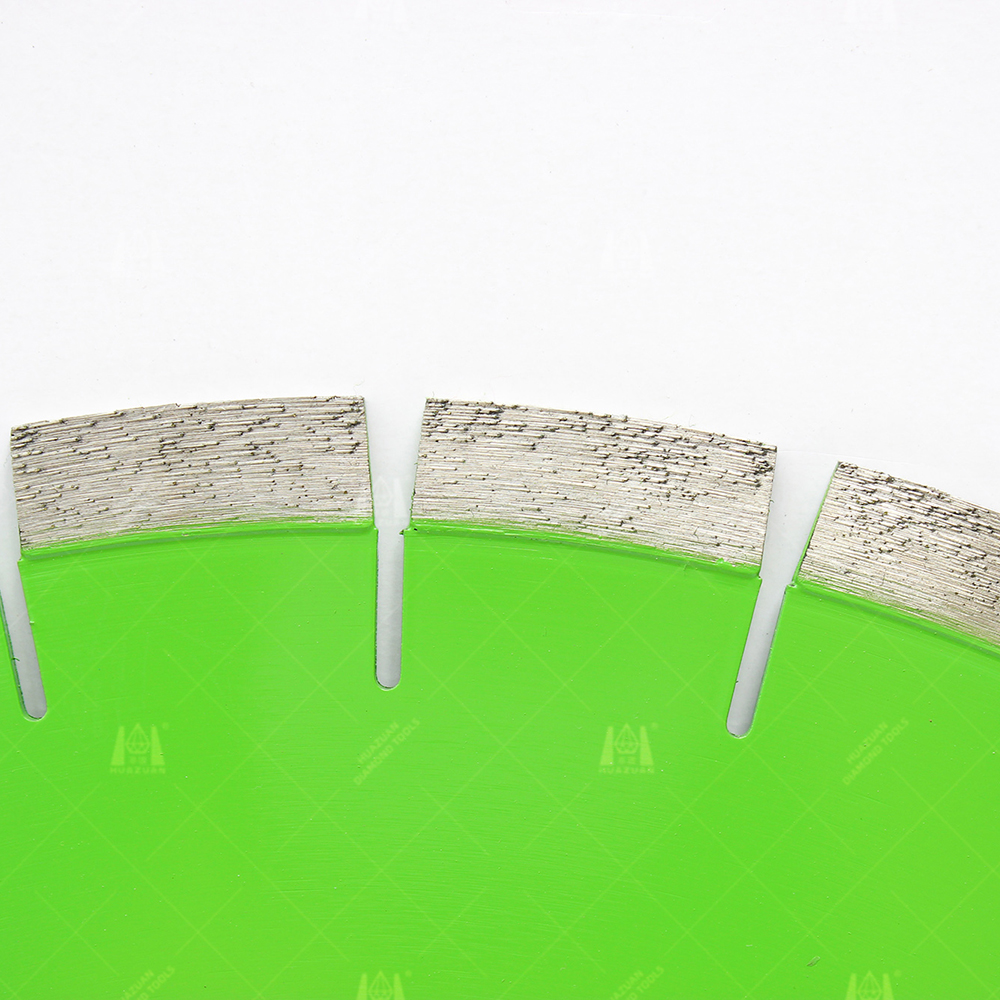
Sizing your tool correctly optimizes overall cutting performance. You must align the diamond blade diameter strictly with your parameters. Match it precisely to your maximum required depth of cut. Do not purchase a larger size just for potential future uses. Oversized tools suffer from severe lateral deflection during operation. They also experience rapid and dangerous steel core fatigue. Buy exactly the size you need for the specific project.
Segment styles directly define your final finish quality. You generally choose between three primary manufacturing options:
Segmented: These offer highly aggressive cutting action. They provide significantly better air cooling through the gullets. You will find them ideal for heavy construction and rough cutting tasks.
Continuous Rim: These deliver an ultra-smooth, chip-free finish. They cut slower but provide exceptional precision. They remain essential for processing glass, ceramic tile, or delicate stone.
Turbo: These offer an excellent hybrid approach. They balance fast operating speeds and a very clean finish. They feature serrated edges for better material removal and cooling.
Finally, you must consider the kerf dimensions. This term refers to the overall segment thickness. Specify narrow kerfs to conserve expensive or rare materials. Narrow kerfs also cut noticeably faster on low-horsepower saws. Thicker kerfs serve an entirely different industrial purpose. They provide heavy-duty tracking capabilities in deep cuts. They ensure an extended lifespan during highly aggressive concrete applications.
Excessive heat destroys industrial diamond tools incredibly fast. You must specify your intended cooling method upfront. Tell the manufacturer if the tool runs completely wet or dry. This single operational detail dictates the entire manufacturing process. It fundamentally changes how the segments attach to the steel core.
Manufacturing variances play a significant role here. Dry-cutting applications endure extreme thermal heat buildup. Manufacturers must laser-weld these specific segments to the core. Laser-welding prevents the segments from detaching under severe stress. Wet-cutting applications operate in much cooler environments. Manufacturers can safely use silver-brazing for these specific tools. Silver-brazing costs slightly less during production. However, it requires constant and uninterrupted water cooling during operation.
If you plan on cutting wet, detail the coolant flow rates. Specify the expected gallons-per-minute of water flow. Water flow does much more than simply cool the steel. It actively flushes away the highly abrasive material slurry. Insufficient slurry removal causes major mechanical issues. The trapped slurry acts exactly like an abrasive paste. It prematurely wears away the steel core beneath the segment. Engineers call this destructive phenomenon undercutting. Eventually, severe undercutting causes catastrophic segment loss. Proper flow data helps manufacturers design specialized undercut protection features.
You cannot maximize cutting speed and lifespan simultaneously. Basic physics makes this dual optimization impossible. Buyers must clearly define their primary economic driver. Setting clear success criteria prevents operational disappointment later.
You must balance hourly labor against consumable costs carefully. A highly aggressive, faster-cutting tool reduces your hourly labor costs. Your operators finish their assigned tasks much quicker. However, this approach increases your overall consumable spend. The tool naturally wears out much faster. A longer-lasting, durable tool flips this economic equation. It reduces tooling changes significantly throughout the month. You purchase fewer replacement tools overall. But it may slow down your daily production rates. You must decide which operational metric matters most.
Diamond concentration levels control this exact balance. Concentration refers to the specific percentage of diamond grit inside the segment. High concentration means more synthetic diamonds per segment volume. This usually extends the lifespan considerably. Low concentration exposes the sharp diamonds faster. This drastically increases the cutting speed. Specifying this percentage sets highly transparent expectations. It perfectly aligns the final manufactured product with your operational goals.
Specification Focus | Expected Cutting Speed | Expected Tool Lifespan | Best Application Scenario |
|---|---|---|---|
Low Diamond Concentration | Very High | Noticeably Shorter | Time-sensitive projects, low-horsepower saws |
High Diamond Concentration | Moderate | Significantly Extended | High-abrasion materials, high-horsepower equipment |
Soft Bond Matrix | Consistently Fast | Variable | Extremely hard or highly dense aggregates |
Hard Bond Matrix | Slower | Maximum Duration | Soft, highly abrasive base materials |
Ordering a newly engineered custom solution carries some initial risk. You can successfully mitigate this through a structured prototyping phase. Always request a small test batch first. A prototype successfully validates the new bond formulation. You test the tool thoroughly in real-world job site conditions. This crucial step proves the concept before committing to bulk production. It prevents large-scale manufacturing mistakes.
Establish highly realistic expectations regarding fulfillment timelines. Custom manufacturing involves distinct and variable timelines. Minimum Order Quantities usually apply to specialized runs. You will likely encounter initial engineering or tooling fees. Lead times vary heavily based on steel core availability. Ordering a completely non-standard core increases the waiting period. Plan your project inventory accordingly to avoid delays.
Use a standardized specifier checklist to request your quote. Gathering highly accurate data ensures a perfect custom cutting blade. Include these vital data points for the manufacturer:
Material Profile: Exact aggregate types, steel reinforcement presence, and Mohs hardness.
Motor Power: Precise equipment horsepower and torque ratings.
Operational Speed: Target spindle RPM and surface feet per minute limits.
Mounting Specs: Exact arbor size, flush-mount needs, and pinhole locations.
Environment: Strict wet or dry cutting application details.
Dimensions: Required maximum diameter and desired kerf width.
Primary Goal: Strict preference for high speed or extended lifespan.
Specifying a specialized tool remains an exercise in rigorous data collection. It demands deep operational clarity from your entire project team. Guessing dimensions leads directly to poor field performance. Precise variables yield engineered precision and safety. Partnering with a transparent manufacturer remains highly recommended. Ensure they actively ask for these exact operational variables. This relationship guarantees highly predictable equipment performance. It keeps your operators incredibly safe and efficient. Stop settling for off-the-shelf compromises on complex jobs today. Submit your equipment specifications and material profiles to an engineering expert. Request a comprehensive custom tooling evaluation before starting your next major project.
A: Standard lead times usually range from 3 to 8 weeks. This timeframe accounts for custom engineering, precise manufacturing, and final shipping. The exact duration depends heavily on steel core availability. If your specified dimensions require a non-standard core, expect slightly longer wait times for specialized fabrication.
A: Customizing implies strict specialization. While hybrid bonds certainly exist, they perform like general-purpose tools. Mixing highly varied materials forces a compromise. It diminishes the extreme efficiency that custom manufacturing originally provides. We highly recommend dedicated tools for distinctly different materials to maximize performance.
A: You can look for two easily verifiable symptoms. Severe glazing or excessive sparking indicates a metal bond that is too hard. The matrix fails to expose fresh diamonds. Conversely, extremely rapid segment wear indicates a bond that is far too soft for your specific material.
A: Custom tools generally keep equipment warranties completely intact. You must ensure the specified RPM, weight, and arbor constraints match the manufacturer's safe operating limits. Always consult your specific equipment manual. Operating a tool strictly within engineered tolerances rarely causes warranty disputes with machinery brands.


 No.351, Dingshi Jing, Shijing, Dongling Town, Huian, Quanzhou, Fujian, China
+86-595-86780371
+86-15905012435


