
 English

Views: 0 Author: Site Editor Publish Time: 2026-06-29 Origin: Site


Speed sounds simple, but it can mislead buyers. A diamond wire saw may move fast, yet cut slowly if the material is hard, deep, or unstable. In this article, you will learn what cutting speed really means, how wire speed and feed rate work together, and how to choose safer starting parameters.
● A diamond wire saw cutting speed depends on material type, cutting depth, wire size, diamond bead design, machine stability, coolant, and required surface quality.
● Wire speed and feed rate are not the same. Wire speed means how fast the diamond wire moves. Feed rate means how fast the wire advances through the material.
● Higher wire saw speed can improve cutting efficiency, but only when feed rate, tension, cooling, and alignment are well matched.
● Hard materials such as granite, reinforced concrete, silicon carbide, and advanced ceramics need slower, more controlled cutting.
● Softer or easier-to-cut materials often allow a higher cutting rate, but dust, heat, or vibration still need control.
● The best diamond wire saw cutting parameters are usually found through test cuts, load monitoring, and parameter records.
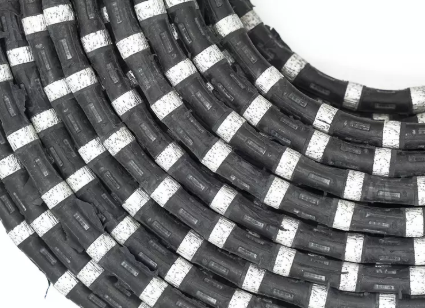
A diamond wire saw can run at high linear wire speed, often measured in meters per second. In many cutting jobs, the practical diamond wire speed is not the machine’s top speed. It is the speed range that gives stable cutting, clean surfaces, and acceptable wire life.
For stone, concrete, and many industrial materials, operators often begin with a moderate wire speed, then adjust it after checking the cut. If the wire runs too slowly, cutting may become inefficient. If it runs too fast, heat, vibration, and bead wear may rise.
Hard and brittle materials need control more than raw speed. A diamond wire saw can cut them effectively because diamond beads grind and fracture the material along a narrow path. Yet materials such as granite, quartzite, silicon carbide, sapphire, and technical ceramics resist cutting strongly.
For these materials, the cutting rate is often limited by surface quality, edge chipping, and wire load. A slower feed rate can protect the wire and reduce cracks. A higher wire speed may help the diamond grains contact the material more often, but it should not be used to force the cut.
Glass, quartz, and ceramics need a balance between cutting time and surface finish. They may cut faster than ultra-hard ceramics, but they can chip or crack if feed rate is too aggressive.
A moderate wire speed with a controlled diamond wire saw feed rate is usually safer. The goal is to let the diamond beads remove small amounts of material per pass. This helps improve smoothness and reduces the risk of hidden damage.
Granite and marble cutting speed depends on stone hardness, block size, bead type, and machine power. Marble is usually easier to cut than dense granite. Granite often needs a stronger wire, stable tension, and enough cooling.
For construction work, diamond wire saw concrete cutting speed depends on reinforcement, cutting area, pulley setup, and jobsite access. Reinforced concrete slows the cut because the wire must pass through both concrete and steel. The wire may still cut cleanly, but the operator must keep tension and cooling stable.
Material group | Speed expectation | Main limit |
Graphite and soft industrial materials | Faster cutting | Dust control and wire loading |
Glass, quartz, silicon | Medium cutting rate | Surface finish and cracking |
Granite and marble | Medium to slow | Hardness, block size, cooling |
Reinforced concrete | Variable | Steel content and access |
Sapphire, SiC, advanced ceramics | Slow and controlled | Wire wear and micro-cracks |

Wire speed is the movement of the diamond wire. Feed rate is how fast the machine pushes the wire through the material. They work together, but they are not equal.
A high wire speed with a low feed rate can improve surface quality, yet it may not reduce cutting time much. A high feed rate may improve productivity, but it can overload the wire. Real cutting efficiency comes from matching both settings.
Maximum speed looks attractive on a specification sheet. In real cutting, it may shorten wire life or create vibration. If the guide wheels are not aligned, high speed can turn a small mechanical issue into a visible wavy cut.
Tip: Run a short test cut before production, then increase speed only when load, sound, and surface finish stay stable.
For a new material, start in the middle, not at the top. Set a moderate wire speed, use a conservative feed rate, and check the cut face. If the cut is smooth and load is stable, increase feed rate step by step.
This approach reduces scrap. It also helps build a clear diamond wire saw speed chart for future jobs.
Material is the first factor. Softer stone or graphite usually allows a faster cutting rate. Dense granite, reinforced concrete, and hard ceramics slow the process.
Brittleness also matters. Brittle materials can break cleanly, but they may chip if the diamond wire saw feed rate is too high. Ductile metals may smear, clog the wire, and reduce cutting efficiency.
A shallow cut is easier than a deep cut. When the wire contacts more material, resistance rises. The wire may bow, heat builds, and cutting time increases.
Large blocks, thick walls, and deep structural cuts need more patience. The operator may need lower feed rate, better cooling, and tighter control of tension.
Wire design affects speed. A thicker wire may offer strength, but it removes more material. A thinner wire can reduce kerf loss, but it may be more sensitive to tension and breakage.
Diamond grit and bead bond also matter. Sintered diamond beads are often used for demanding stone and concrete cutting because they support steady cutting and longer service life. Coatings can also help protect the wire from wear, vibration, or harsh conditions.
Even the best wire cannot perform well on an unstable setup. Guide wheel alignment, pulley layout, machine rigidity, and tension control affect diamond wire saw cutting rate. If the wire vibrates, speed must drop.
Note: If the surface becomes wavy at higher speed, check alignment and guide wheel condition before changing the wire.
As wire speed rises, more diamond grains pass through the cutting zone each second. Each grain removes a smaller amount of material. This can improve surface finish and reduce deep scratches.
However, more contact also means more friction. If cooling is poor, heat may damage the wire or reduce bead life. So higher wire saw speed must be supported by good cooling and stable movement.
Feed rate controls the chip load. When feed rate rises, each diamond grain must remove more material. This can reduce cutting time, but it also raises force.
If the feed rate is too high, the wire may bow. The cut can become tapered. The motor load may rise. In worse cases, the wire may slip or break.
A higher wire speed may improve finish, but it does not always raise output. If feed rate stays low, the wire moves faster but removes about the same amount of material per minute.
To improve diamond wire saw material removal rate, increase feed rate carefully while keeping the wire stable. The safest method is gradual adjustment, not sudden changes.
The best balance depends on the job goal. If the buyer needs a smooth stone surface, lower feed rate and stable wire speed may matter more. If the goal is demolition speed, higher cutting rate may matter more, but wire life and safety still count.
Tip: Track wire speed, feed rate, material, cut depth, cooling method, and final surface quality for every repeated job.
Graphite and some softer industrial materials can cut faster because they create lower resistance. But fast cutting does not mean trouble-free cutting. Graphite dust can pack around the diamond grains and lower cutting efficiency.
Dust extraction is important here. Without it, the wire may feel dull even when it still has usable diamond beads.
Glass, quartz, and silicon need careful control. They are not always the slowest materials, but they punish poor settings. Too much feed rate can leave chips, cracks, or rough edges.
A stable diamond wire saw cutting speed helps keep the cut smooth. Cooling also helps remove debris and reduce heat near the cutting zone.
Very hard ceramics need slower feed rates. The wire must cut through material that strongly resists abrasion. Pushing too fast can raise wire wear and increase the risk of wire breakage.
In these cases, the best cutting efficiency may come from lower stress, not higher speed. A slightly longer cutting time can save more money if it reduces wire replacement and rejects.
Stone and construction cutting are different from precision slicing. The workpiece may be large, uneven, or reinforced. A diamond wire saw for granite cutting speed depends on stone density, block shape, bead design, and water flow.
For concrete, steel bars change the cut. The wire must shift between abrasive concrete and metal reinforcement. Spring-rubber coated wires can help reduce vibration, maintain steadier tension, and support safer cutting in demanding structures.
A safe setup begins with balance. Do not start at full speed. Choose a moderate wire speed and a conservative feed rate. Let the first cut show how the material reacts.
If the sound is smooth, load is stable, and surface quality is acceptable, you can raise feed rate in small steps.
Feed rate is the fastest way to reduce diamond wire saw cutting time. It is also the fastest way to cause trouble. Watch load changes closely. Rising load often means the wire is working too hard.
If the wire bows, the cut face becomes rough, or the machine sound changes, reduce feed rate first.
Cooling removes heat and slurry. It also helps diamond beads stay exposed. For stone and concrete, water cooling often improves cutting stability. For dry materials, dust extraction may be more important.
Note: Poor debris removal can make a good wire cut like a worn wire.
A simple record can save hours later. List material, wire type, wire speed, feed rate, tension, coolant, cut size, and final result. Over time, this becomes a practical diamond wire saw speed chart for your workshop or jobsite.
A rough surface often means the feed rate is too high for the wire speed. Each diamond grain removes too much material. Lower feed rate or raise wire speed slightly, then test again.
Wire breakage can come from high tension, high feed rate, poor alignment, or worn wire. Speed may only make the problem appear sooner. Reduce load and inspect the setup before restarting.
Wavy marks often point to vibration. Check guide wheels, pulley layout, wire tension, and machine stability. A speed change may hide the issue, but it will not fix poor alignment.
High speed creates more friction events. High feed rate adds more force. Together, they may shorten wire life. The lowest cost per cut often comes from stable cutting, not maximum speed.
Huazuan Diamond Tools provides diamond wire saw solutions for stone, concrete, reinforced concrete, and other demanding cutting jobs. Its product range includes diamond wire for granite, concrete cutting wire, marble cutting wire, and related diamond tools used in cutting, drilling, grinding, and stone processing. The company’s wire products use practical structures such as sintered diamond beads, protective coatings, high-strength steel cable, and tension-support designs to help improve cutting stability, service life, and cut quality.
For buyers comparing diamond wire saw cutting parameters, the value is not only in the wire itself. It is also in choosing the right bead structure, coating method, wire diameter, and application match. Huazuan Diamond Tools also supports customized sizes and OEM service, which helps users adapt the wire to quarrying, block squaring, chamfering, demolition, bridge work, basement cutting, tunnel repair, and other project needs.
A diamond wire saw can cut fast. Yet speed depends on material, depth, wire design, feed rate, and stability. Higher wire speed may help, but it is not enough alone. The best result comes from balanced cutting parameters, steady tension, good cooling, and careful testing.
A: A diamond wire saw cuts at different rates based on material, feed rate, and depth.
A: Material hardness, wire speed, feed rate, tension, and cooling control diamond wire saw speed.
A: Granite is dense and abrasive, so feed rate must stay controlled.
A: Not always. Faster speed may raise wire wear if settings are poor.
A: Check wire condition, cooling, tension, feed rate, and machine alignment.


 No.351, Dingshi Jing, Shijing, Dongling Town, Huian, Quanzhou, Fujian, China
+86-595-86780371
+86-15905012435


