
 English

Views: 0 Author: Site Editor Publish Time: 2026-07-04 Origin: Site


Is cutting strength enough when the material is granite, concrete, or reinforced steel? Not always. Diamond wire cutting solves this by using a moving diamond wire to grind hard materials. A diamond wire saw controls the wire, speed, tension, and cutting path. In this guide, we explain how it works, where it is used, and why it matters.
● Diamond wire cutting is an abrasive cutting method. It uses diamond-coated wire or diamond bead wire to grind hard, brittle, or reinforced materials.
● A diamond wire saw is the machine system that drives, guides, and tensions the wire during cutting.
● It does not cut like a toothed blade. It removes material through micro-abrasion.
● It is used for marble, granite, reinforced concrete, ceramics, glass, silicon, and metal-related cutting jobs.
● Its main advantages include high precision, low vibration, narrow kerf loss, and flexible cutting ability.
● It needs correct wire selection, cooling, tension control, and skilled operation.
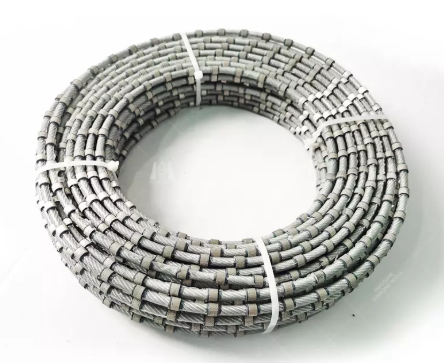
Diamond wire cutting is a precision cutting process that uses a moving wire coated or fitted with industrial diamond abrasives. These diamond particles act as many small cutting points. As the wire moves across the material, it removes tiny particles from the surface.
It does not cut like a toothed blade. A toothed blade bites into the material, while a diamond wire grinds through it. This makes it useful for hard, brittle, thick, or reinforced materials. Granite, marble, concrete, ceramics, glass, silicon, and steel-reinforced structures can be difficult for many standard tools. Diamond wire cutting gives operators a more controlled way to cut them.
A diamond wire saw is the machine or cutting system that moves the diamond wire. It guides the wire around pulleys, keeps it under tension, and controls cutting speed. The machine may use a continuous loop wire or a reciprocating wire, depending on the cutting task.
The saw does more than move the wire. It also helps keep the cut stable. If the wire is not guided well, it can wander. If the tension is wrong, it may break or create an uneven cut. A good diamond wire saw helps balance speed, control, safety, and wire life.
A standard saw blade is rigid. Its cutting depth depends on blade size. A diamond wire is flexible. It can wrap around a large workpiece, pass through a drilled hole, or cut a thick section that a blade cannot reach.
The cutting path is also narrow. This narrow path is called kerf. A narrow kerf means less material loss. This matters when cutting expensive stone, crystal, ceramics, or semiconductor material. It also helps in demolition, where cleaner cuts make section removal easier.
A diamond wire cutting system usually includes the wire, drive motor, guide pulleys, tension control unit, cooling system, feed system, machine frame, and safety guards. Each part affects the final cut.
The wire provides the abrasive cutting action. The pulleys guide the path. The motor drives wire movement. The tension system keeps the wire stable. The cooling system controls heat and removes debris. If one part is poorly matched, the process may slow down or become unstable.
Industrial diamonds are used because they are extremely hard. They can grind materials that would wear down many common cutting tools. Each diamond particle creates small scratches and fractures on the surface. Over time, these small actions remove material in a controlled way.
Diamond abrasives are especially useful when the workpiece cannot handle heavy impact. They help cut hard materials while reducing mechanical shock.
Several terms help explain this process. Diamond wire means the coated or bead wire used for cutting. Diamond bead means the abrasive bead fixed to the wire. Kerf loss means the material lost along the cutting path. Cutting speed means how fast the wire moves. Feed rate means how quickly the wire enters the material. Wire tension means the pulling force that keeps the wire stable. Swarf means fine cutting debris.
The process starts by positioning the diamond wire around the workpiece or through a prepared hole. In concrete cutting, operators may drill access holes first, then thread the wire through them. In stone cutting, the wire follows the planned cut line.
Once the wire is in position, the diamond wire saw moves it at controlled speed. The wire travels around guide pulleys and contacts the material. The diamond particles grind the surface. Coolant flows into the cut to reduce heat and remove swarf. The feed system then moves the wire deeper until the cut is complete.
This process looks simple, but every setting matters. Wire type, pulley alignment, coolant volume, cutting speed, and feed pressure all affect the result.
Wire speed affects how quickly diamond particles pass across the material. If the speed is too low, cutting may become slow and uneven. If it is too high, heat and wear may increase. The best speed depends on material hardness, wire design, and machine power.
Feed rate controls how fast the wire moves into the material. Too little feed can waste time. Too much feed can overload the wire, reduce accuracy, or cause early wear. A granite block, reinforced concrete wall, and silicon ingot do not behave the same way. Each needs suitable cutting settings.
Diamond wire cutting creates heat through friction. If heat builds up, it can damage the wire, reduce diamond exposure, or affect the workpiece. Cooling helps prevent these issues.
Water is often used because it cools the wire and removes debris from the cut. Clean debris removal matters because swarf can block the cutting path. When the cutting zone stays clean, the wire can grind more smoothly.
Wire tension keeps the cutting path stable. If tension is too low, the wire may shake, bend, or drift. If tension is too high, the wire may face too much stress and break.
Proper tension also helps reduce vibration. It keeps the wire aligned across pulleys and improves cutting accuracy. For large-section cutting, this is especially important.
Tip: Before starting a cut, check wire tension, pulley alignment, coolant flow, and feed settings. These checks can prevent many common cutting problems.
Diamond wire cutting is widely used for marble, granite, limestone, sandstone, and quartz-based materials. In quarrying, it helps separate large stone blocks from the rock mass. In slab production, it helps prepare blocks for later cutting, polishing, and shaping.
Stone value depends on yield and surface quality. A narrow kerf helps reduce waste. Low vibration helps limit cracks. Clean block geometry also improves later processing.
A diamond wire saw can cut concrete walls, beams, columns, foundations, bridge sections, and heavily reinforced structures. It can grind through concrete and embedded steel, which makes it useful in controlled demolition.
Compared with impact tools, wire cutting creates less vibration. This helps protect nearby structures. It is useful in renovation projects, industrial plants, bridges, tunnels, and urban sites.
Glass, ceramics, sapphire, and similar materials are hard but fragile. They may crack under strong impact. Diamond wire cutting uses controlled abrasion, so it can reduce mechanical shock.
This does not remove all risk. Poor support, wrong feed rate, or weak cooling can still cause defects. But with the right setup, it can help create cleaner cuts on brittle materials.
In precision manufacturing, diamond wire cutting is used for silicon, crystal materials, wafers, and other high-value substrates. The main goals are low kerf loss, stable cutting, and better surface control.
For these materials, waste is expensive. Even small material loss can affect cost. A narrow and stable cut helps improve yield and reduce later finishing work.
Diamond wire cutting can create accurate cuts on difficult materials. Precision comes from controlled wire movement, stable tension, correct wire choice, and steady feed. The wire removes material gradually, so it can protect the workpiece better than many high-impact methods.
This matters in stone processing, precision parts, and structural cutting. If the cut line must stay clean across a thick section, a diamond wire saw can be a strong option.
Many cutting methods create vibration. Strong vibration may damage fragile materials or nearby structures. Diamond wire cutting lowers this risk because it grinds instead of striking.
This is useful for reinforced concrete removal, bridge modification, wall cutting, and confined renovation work. It also helps when operators need to cut near sensitive equipment or occupied areas.
A narrow kerf removes less material. This can make a real difference in stone, ceramics, silicon, and other high-value materials. It can also make demolition cleaner because the cut line is more controlled.
Reduced waste is not only about saving material. It can also reduce cleanup, handling work, and finishing time.
A diamond wire saw can handle large, thick, irregular, or hard-to-access workpieces. It can cut shapes and sections that many rigid blades cannot reach. This flexibility is useful in quarrying, construction, underwater cutting, and industrial maintenance.
Cutting Factor | Diamond Wire Cutting | Standard Blade Cutting |
Cutting action | Abrasive grinding | Teeth or rigid blade action |
Cut depth | Flexible for thick sections | Limited by blade size |
Vibration | Usually lower | Often higher |
Kerf loss | Narrower in many applications | Often wider |
Best use | Hard, thick, brittle, reinforced materials | Simple or shallow cuts |
Access ability | Strong in complex areas | More limited |
Note: Diamond wire cutting is often chosen for control, not only speed. It helps manage waste, vibration, access, and cut quality.
Diamond wire and diamond wire saw systems usually cost more than basic cutting tools. The machine, wire, pulleys, coolant setup, and spare parts all add cost. For simple cuts, this may not be the most economical choice.
However, cost should be judged by the full result. If the material is expensive, the structure is sensitive, or the cut is too deep for a blade, diamond wire cutting may save money by reducing waste, damage, and delay.
Diamond wire is a consumable. It wears during cutting. Diamond beads may lose sharpness. The wire may fatigue. Poor tension, poor cooling, or wrong feed pressure can increase the risk of breakage.
Regular inspection is important. Operators should check for uneven bead wear, damaged coating, wire twisting, weak joints, and pulley damage. Maintenance improves safety and keeps cuts predictable.
Diamond wire cutting requires planning. Operators must choose the right wire, set the cutting path, align pulleys, control tension, prepare coolant, and secure the workpiece. In reinforced concrete cutting, they may also need anchor points and lifting steps.
Setup may take longer than a simple blade cut. Still, this planning supports safer cutting on large or complex jobs.
Diamond wire cutting is powerful, but it is not always needed. Thin, soft, or low-value materials may be easier to cut with a standard blade or another tool. The best method depends on material hardness, cut depth, accuracy needs, access space, and cost target.
Tip: Use diamond wire cutting when ordinary methods create too much vibration, waste, or access difficulty. For simple shallow cuts, compare total cost first.
In quarrying, diamond wire cutting helps remove large blocks from natural rock. It is common for marble, granite, and limestone. The method helps form cleaner block shapes and reduce cracking during extraction.
In stone factories, it also supports slab preparation. Cleaner cuts can reduce later grinding and polishing work. Better block yield can improve production value.
Construction teams use diamond wire saw systems to cut reinforced concrete, bridge sections, foundations, columns, beams, and large floor slabs. It is useful when a structure is too thick or too reinforced for standard cutting tools.
Controlled demolition often needs accuracy. Crews may need to remove one section while keeping nearby areas safe. Diamond wire cutting allows them to cut sections cleanly, then lift them away.
Precision industries use diamond wire cutting for hard and brittle materials such as silicon, sapphire, glass, and ceramics. These materials require stable cutting because cracks, chips, or excess kerf loss can reduce yield.
A properly selected wire can support smoother cutting and better material use. In these applications, the goal is not only to cut through the material. It is to keep the material useful after cutting.
Some projects happen in areas where large machines cannot fit. Others happen underwater or in remote industrial sites. Diamond wire saw systems can adapt to many of these situations because the wire path is flexible.
This makes them useful for subsea structures, pipelines, bridge repairs, plant maintenance, and restricted demolition work. Remote operation may also improve safety when direct access is difficult.
A diamond wire saw machine should provide stable wire movement, smooth pulley guidance, reliable tension control, and safe operation. These factors help maintain cutting accuracy and reduce wire stress.
For stone and concrete work, machine stability is very important. A weak system can affect cut quality even when the wire itself is good. Buyers should review the frame, drive system, tension method, cooling design, and maintenance needs before choosing equipment.
Diamond wire is the main consumable in this process. Different materials need different wire designs. Granite cutting wire, marble cutting wire, concrete cutting wire, and metal-related cutting wire may use different bead structures, bonds, coatings, or abrasive designs.
Wire selection should match material hardness, cutting depth, machine power, expected finish, and cooling method. A wire that cuts fast in marble may not suit reinforced concrete.
Accessories also affect cutting performance. Guide pulleys, tension parts, clamps, coolant components, replacement wheels, and other wear parts help the system stay stable.
Good accessory support reduces downtime. It also helps maintain wire life and cut quality. For companies that run cutting equipment every day, spare part availability can be as important as machine power.
Huazuan Diamond Tools offers diamond tools and related stone machinery, including diamond wire saw products for marble, granite, concrete, and metal-related cutting needs. The company’s product range also includes diamond segments, diamond saw blades, diamond core bits, polishing tools, profiling tools, and wire saw machines. This wider product structure helps customers match cutting tools, machines, and application needs in one purchasing plan.
The value is not only in the product list. For a diamond wire saw project, customers often need help choosing wire type, bead design, cutting parameters, and machine support. Material hardness, thickness, reinforcement, coolant conditions, and production goals all affect the final choice. A supplier that understands these factors can help reduce trial cost, improve cutting stability, and support long-term operation.
Note: When comparing suppliers, ask for application guidance, not only product price. The right wire and settings can save more than a cheaper first purchase.
Diamond wire cutting uses diamond abrasives to grind hard materials. It is precise, flexible, and low vibration. A diamond wire saw controls wire speed, tension, cooling, and path. It suits stone, concrete, ceramics, glass, and precision materials. It costs more than simple tools, but it can reduce waste, stress, and cutting risk.
A: It is abrasive cutting using diamond-coated wire.
A: A diamond wire saw cuts stone, concrete, ceramics, and silicon.
A: A diamond wire saw gives low vibration and narrow kerf.
A: It costs more, but may reduce waste.
A: Yes. It can cut concrete and embedded steel.
A: Poor tension, heat, wear, or misalignment can break it.


 No.351, Dingshi Jing, Shijing, Dongling Town, Huian, Quanzhou, Fujian, China
+86-595-86780371
+86-15905012435


